|
Judi's
opinion: Reduce/stop our dependence on coal
 But somehow, I can't shake
the feeling that I am somewhat
to blame for this disaster.
What's more I contend that we all are
partially responsible for this. But somehow, I can't shake
the feeling that I am somewhat
to blame for this disaster.
What's more I contend that we all are
partially responsible for this.
The reason I believe this
is that our country is still highly dependant on coal
to power our electricity power plants; to keep the
lights on; run the air conditioner; to power our electronics
and we are not doing enough to persuade our
local, state and federal government leaders
to move quickly to renewable energy
sources.
Our continued dependence
on coal forces thousands of men, old and
young, into this dreadful profession, forces
them to go, sometimes, miles deep into
unsafe, dirty, dusty, coal mines. How
can we STILL be so dependent on a filthy
19th century fossil fuel now that we know how
destructive it is to our environment and the
lives of men who work in the mines?! Do we have the
right to expect people to work in such
dangerous conditions? No one should die
so we can keep our lights on.
 The
very act of mining is an environmental
disaster as well. Surface mining
strips off the rich topsoil, releasing toxic gases such as methane, one of
the most toxic greenhouse gases, into the
atmosphere and allows heavy metals such as
mercury and lead to leach out of the ground,
eventually running into nearby rivers and
estuaries and into the ocean. It also
produces coal dust which settles on
everything and everyone living nearby. The
very act of mining is an environmental
disaster as well. Surface mining
strips off the rich topsoil, releasing toxic gases such as methane, one of
the most toxic greenhouse gases, into the
atmosphere and allows heavy metals such as
mercury and lead to leach out of the ground,
eventually running into nearby rivers and
estuaries and into the ocean. It also
produces coal dust which settles on
everything and everyone living nearby.
And we have now seen first
hand how dangerous underground mining is. Not only does it have all
the ruinous elements of surface mining (they
have to dig out the earth and put it
somewhere), but it also puts many lives at risk;
not only to those who work in the mines but
also to those who live in the area, who breathe in the
gases and dust and sometimes get sick and
die.
As we have frequently seen
in our capitalistic society the primary
interests of mining companies are the bottom line, costs,
profits, dividends to the shareholders and
bonuses for the CEOs and management.
That's CAPITALISM! The concern of
safety for the men who work in the mines is
secondary, which is why we learned that the
company was fined for more than 122 safety
violations. It appears it was cheaper
to continue to pay fines than it was to provide
a safe working environment for these men. (Somehow
I cannot stop seeing parallels between this
and the proposed Pebble Mine in the Bristol
Bay area.)
Now many will say that we
did not force these men to go into mines;
but in many areas that is the only option
available to the people living there. Coal mining has always been
done and the state has become dependant on
the revenues generated from that industry.
Sounds a bit like Alaska, doesn't it.
Leadership is needed in these states to turn
the economy away from coal and attract new
types of development in the state. Should we stop using coal
to power our electric plants? Yes.
Should we put these men out of work?
No. What we need to do is move as fast
as we can to renewable energy sources such
as solar, wind, geothermal. One option
would be to re-train people in these new
technologies and provide incentives for renewable
energy manufacturing and research companies to move
into
coal states and provide jobs for the people
there. Those who are close to
retirement and do not want to start a new
career, will be allowed to retire at full
retirement pay.
In the meantime we can all
do our part to conserve electricity so that
we use less fossil fuels and reduce our
personal dependence on these destructive elements.
If our governments won't act to move us to
renewable energy, then we must do more individually; else we will continue to
bear some personal responsibility in future
deaths. |
Bob's
opinion: Make coal mining safer - put
the safety of the miner's first
 But
as consumers, I and the reader, are partly
to blame for this disaster. We all
want electricity, and not only that, we want
it CHEAP! This forces suppliers to cut or
postpone costs, delay repairs and
inspections, lobby for lax regulations and
then do only the minimum required, trade off
safety improvements against the fines for
non-compliance - the list goes on.
Right here in our back yard managers of our
power co-op reluctantly decided to abandon
plans to revive an obsolete coal plant - But
as consumers, I and the reader, are partly
to blame for this disaster. We all
want electricity, and not only that, we want
it CHEAP! This forces suppliers to cut or
postpone costs, delay repairs and
inspections, lobby for lax regulations and
then do only the minimum required, trade off
safety improvements against the fines for
non-compliance - the list goes on.
Right here in our back yard managers of our
power co-op reluctantly decided to abandon
plans to revive an obsolete coal plant -
 reluctant
because they feel their mission is to
provide power cheaply, with social costs a
distant consideration. Why is coal so
cheap? reluctant
because they feel their mission is to
provide power cheaply, with social costs a
distant consideration. Why is coal so
cheap?
- It is abundant in the
US.
- It generally comes
from states with low incomes.
- We are not paying for
the emitted CO2 which is causing climate
change - we are passing that on the
future generations.
- We are not paying for
pollution like mercury - we are passing
that on the current and future
generations.
- We are not paying for
proper safety precautions - it is
cheaper to stall and pay fines so that's
what suppliers do.
Until we as citizens and
consumers demand that our power systems,
including resource extraction, be as safe as
we can get them - and step up to pay the
costs so that our neighbors in other states
and other countries can live as safely as we
do, WE will continue to be responsible for
the deaths of fellow citizens like those in
West Virginia.
|

 Coal Mining
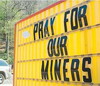
A horrific and tragic disaster occurred in
the mining town of Montcoal, WV and we
wonder if the town and their families will
ever recover from the loss of 29 of their
citizens. These men were husbands,
fathers, brothers, grandfathers, friends and co-workers of the people who live here.
Our heart aches for them and their incredible
loss.
Coal Mining
A horrific and tragic disaster occurred in
the mining town of Montcoal, WV and we
wonder if the town and their families will
ever recover from the loss of 29 of their
citizens. These men were husbands,
fathers, brothers, grandfathers, friends and co-workers of the people who live here.
Our heart aches for them and their incredible
loss.  What
we can do to conserve electricity?
What
we can do to conserve electricity?